Cut the power bill up to 90% — the right way.
Premium renewable energy for households, businesses and property developers — rooftop solar, battery storage and EV-ready systems, installed by SAA-accredited crews. Backed by a 25-year performance warranty and a 100% recycling guarantee at end-of-life — in writing.
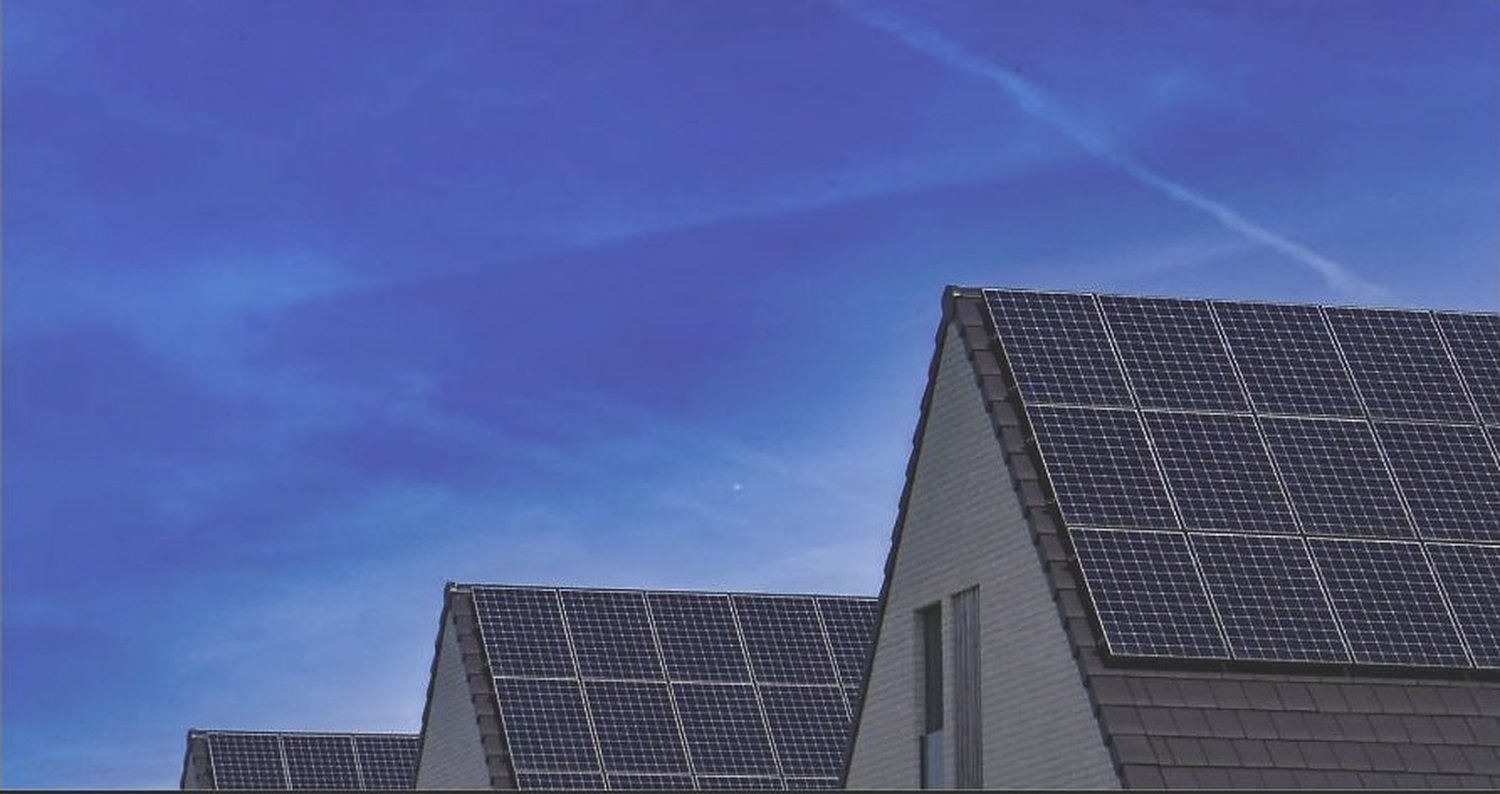
Wattbird is the group’s renewable-energy company — accredited solar, battery storage and EV-ready systems for homes, business and developers, with every replaced system recycled rather than dumped.
Visit wattbird.com.auAnyone can bolt panels to a roof. We’re built to look after the system — and the planet — for its entire life.
Solar has commodified. Installation quality has not. Our renewable-energy division sizes systems to the actual power bill, uses only tier-1 hardware, installs to CEC standards, and stays around for the 25-year warranty.
And uniquely across the industry — every system is contractually enrolled for end-of-life recovery through our group’s recycling and recovery division. Panels, inverters, batteries, cabling. Cradle to grave, no landfill, with a stewardship certificate to prove it. See the recycling loop →
One system. Whole of life.
Design, install, care, and responsible end-of-life — all under one roof and across the group.
New solar install
Premium tier-1 panels sized to the bill, expertly installed with a written lifetime + recycle guarantee. SAA-accredited, AS/NZS 5033 compliant.
Repower & recycle
Replace an ageing system — we remove the old array free, recycle it same-day through our recycling division, and issue a stewardship certificate.
Solar + battery
Store what you generate and slash the bill further. Tesla Powerwall, sonnen, Enphase, BYD, Sigenergy. VPP-ready. Rebates handled.
EV-ready systems
Home 7 kW AC chargers and commercial 22–50 kW DC fast chargers, load-managed and integrated with the solar and battery for smart charging.
Commercial solar
30 kW to 500+ kW commercial rooftop and ground-mount. Financial modelling, PPA options, ESG-grade stewardship reporting on every job.
New-build & developments
Solar-ready and solar-included packages for property developers, body corporates and new estates. Bulk pricing, single point of contact, streamlined handover.
Backed in writing, not just words.
Solar is a 25-year decision. Here’s what we put on paper so customers buy with confidence.
- 25-year performance warranty — tier-1 panels guaranteed to keep producing, backed by the manufacturer and by us.
- Workmanship warranty — our install is guaranteed. If anything’s not right, we come back and fix it.
- Price honoured on the day — the quote accepted is the price paid. No surprise add-ons, no bait-and-switch.
- 100% recycling guarantee — contractually, the old and future system is recycled through the group’s recovery division. No landfill, certified.
- Government rebate applied up front — the STC discount is already in the quote. No waiting, no claiming.
A "25-year warranty" on its own means very little.
There are four separate warranties on a solar system, and most quotes blur them into one number. Here is how ours actually break down.
Product and performance
Product warranty on the panels themselves, not just output. Tier-1 hardware with genuine 25-year product cover, and a performance guarantee holding output to a set level across that period.
The hardest-working part
The inverter runs every day and is where reliability is won or lost. Every inverter we fit carries at least a 10-year warranty backed by an Australian entity — 15 years on microinverters.
Our own install
Covers the installation itself. If our work is the problem we come back and fix it, no argument. Separate from anything the manufacturer covers.
100% recovery
A clause in the contract, not a policy statement. At end of life the system is collected and recycled through the group's recovery division and a stewardship certificate is issued.
A good system needs a clean once a year and a check about every five years. Anyone demanding paid "maintenance fees to keep your warranty valid" is spinning you.
The government pays for a meaningful slice of it.
We claim the rebates and complete the paperwork. The discount appears in the quote rather than arriving months later.
Solar rebate (STCs)
The federal small-scale scheme works like a point-of-sale discount — in the order of $250 per kW of panels, so a 6.6 kW system attracts roughly $1,650. Claimed by us, shown on the quote, applied up front.
Battery rebate
The federal battery program takes roughly $250–$300 off every usable kWh of storage. Systems from 5 kWh to 50 kWh qualify, with the full rate on the first 14 kWh. It is one claim per home — worth sizing correctly the first time.
Feed-in tariff
What the electricity retailer pays for exported power, typically 0–12c per kWh. It is set by the retailer, not by us, and it is why self-consumption through a battery usually beats exporting.
Finance
Interest-free plans and low-rate green loans for households, and finance or power-purchase-style structures for commercial sites where the preference is no capital outlay. Savings from day one, paid out of the bill reduction.
Lower overheads. Stronger ESG. Zero landfill.
Commercial rooftop that pays for itself and produces the evidence a board needs — with stewardship reporting most installers cannot match.
Built for the stewardship era
Australia is moving toward a mandatory product-stewardship scheme for solar. Businesses able to prove responsible end-of-life management will be ahead of it. Every commercial job is delivered with an NTCRS-ready chain of custody, recovery through authorised facilities, and a certificate for every panel.
How it runs
- Free site assessment and ROI modelling against current certificate settings
- Installed around operating hours, minimal disruption
- Optional battery and monitoring for demand management
- Ongoing service and a documented recycling pathway
The rules for commercial solar are about to change.
On 5 August 2026 the federal government announced it will expand the Small-scale Renewable Energy Scheme so that systems between 100 kW and 1 MW can create Small-scale Technology Certificates — a tenfold lift on the current cap. It is intended to apply to systems installed from 1 October 2026 and is subject to regulations being made. Until then the existing thresholds still apply.
Today — under 100 kW
Systems below 100 kW with annual output under 250 MWh create STCs, claimed at installation and applied to your price as an up-front discount. The certificate clearing-house price is fixed at $40 excluding GST; the open market trades a little below that. Deeming for systems installed in 2026 is five years, dropping by one year annually until the scheme ends in 2030 — so the value of waiting falls every January.
Today — 100 kW and above
Above 100 kW a system is accredited as a power station and earns Large-scale Generation Certificates instead: one certificate per MWh actually generated, created annually on metered output rather than up front. Same energy, very different cash flow. Systems behind a single meter are treated as one device — a large array cannot be split into sub-100 kW slices to claim STCs.
From 1 October 2026 — the missing middle
If the regulations are made as announced, 100 kW to 1 MW moves into the small-scale scheme and becomes eligible for up-front certificates. For a business sizing a system in that band right now, that is a genuine decision point. We will model both cases so you can see the difference rather than guess at it — and we will tell you if waiting is the better answer.
Batteries
The federal battery program is open to businesses, not just households. Systems from 5 kWh to 100 kWh qualify, with certificates claimable on the first 50 kWh of usable capacity, paired with a solar array of no more than 100 kW. The subsidy steps down each year and is tiered by size — full rate to 14 kWh, 60% from 14 to 28, and 15% above that — so oversizing a commercial battery for the rebate rarely pays. The program closes at the end of 2030.
New South Wales
From 14 November 2026 the Peak Demand Reduction Scheme adds two commercial battery activities: 20 to 200 kWh for small and medium business, and 200 kWh to 30 MWh for commercial and industrial sites. Both require solar of at least 25% of battery capacity, a minimum customer contribution, demand-response integration and a ten-year warranty holding 70% capacity. Certificate values are market-set, so we price them at quote rather than advertise a number. The Energy Savings Scheme also covers adding a battery to an existing array — though not standalone solar, which is a generation rather than efficiency measure.
Queensland
Queensland has no state commercial solar rebate to stack on top of the federal scheme, and the Battery Booster program closed in 2024 and was households only. Anyone telling a Brisbane or Gold Coast business otherwise is selling something. The federal certificates, your network tariff and how much you self-consume are what actually move the numbers here.
On tax: the $20,000 instant asset write-off applied to assets first used by 30 June 2026 for businesses under $10M turnover. A continuation from 1 July 2026 was announced in the May 2026 Budget but is not yet law. In any case most commercial solar systems cost well above $20,000 and fall under ordinary depreciation rather than an instant write-off — treat anyone promising otherwise with caution, and confirm with your accountant. Incentive settings reviewed 10 August 2026; schemes change, so figures are confirmed on your quote, not on this page.
Use your own power, day and night.
A battery stores what the roof generates during the day so it gets used at night, instead of being sold back at export rates and bought again at peak.
More of your own power
Self-consume up to 90% of what you generate rather than buying it back from the grid at peak rates.
Blackout backup
Keep essential circuits running through an outage with a backup-capable battery and the right switchboard work.
Sized to real usage
Sized against actual consumption data, never oversold and never undersized. The rule of thumb is roughly twice the solar size in usable storage.
VPP and monitoring
Opt into a Virtual Power Plant and get paid to share stored energy back at peak. Solar, battery and savings visible in real time from a phone.
Tier-1 panels. Leading inverters. Approved batteries.
All CEC-approved and backed by strong manufacturer warranties. We recommend the right product for the roof and budget — never the one that pays us most.
Panels
Jinko Solar · Trina Solar · REC · LONGi · Aiko · Canadian Solar · SunPower · Risen
Inverters
Fronius · SMA · Sungrow · Enphase · SolarEdge · GoodWe · Fox ESS
Batteries
Tesla Powerwall · Sigenergy · BYD · sonnen · iStore · AlphaESS · Enphase
Install with our renewable energy team. Retire with our recycling team. One group. Full loop.
Every install is contractually enrolled for end-of-life recovery via our recycling & recovery division — panels, inverters, batteries, cabling. When the 25-year system reaches end of life, we take it back, sort it, and route the materials into the highest-value recovery pathway. No landfill. Certified in writing. See recycling & recovery →
Accredited local crews across the Gold Coast, Brisbane and Sydney.
Local crews in every city we operate. Growing along the east coast; more cities on the roadmap.
Gold Coast
Home base and flagship install crews. Surfers Paradise, Southport, Robina, Burleigh Heads, Coomera, Nerang, Helensvale, Palm Beach.
Brisbane
Full residential and commercial coverage across Greater Brisbane. CBD, Springfield, Carindale, Sunnybank, Chermside, Ipswich, Logan, Redlands, North Lakes, Cleveland.
Sydney
Now open — bringing the whole-of-life promise to NSW rooftops. CBD, Parramatta, Sutherland Shire, Northern Beaches, Penrith, Hills District.
Not near a branch yet? Register your interest — new cities are on the roadmap.
Tell us about the place — the team will send a tailored quote.
Government rebate already applied, exact savings confirmed on site, and the recycling guarantee included in every contract.